
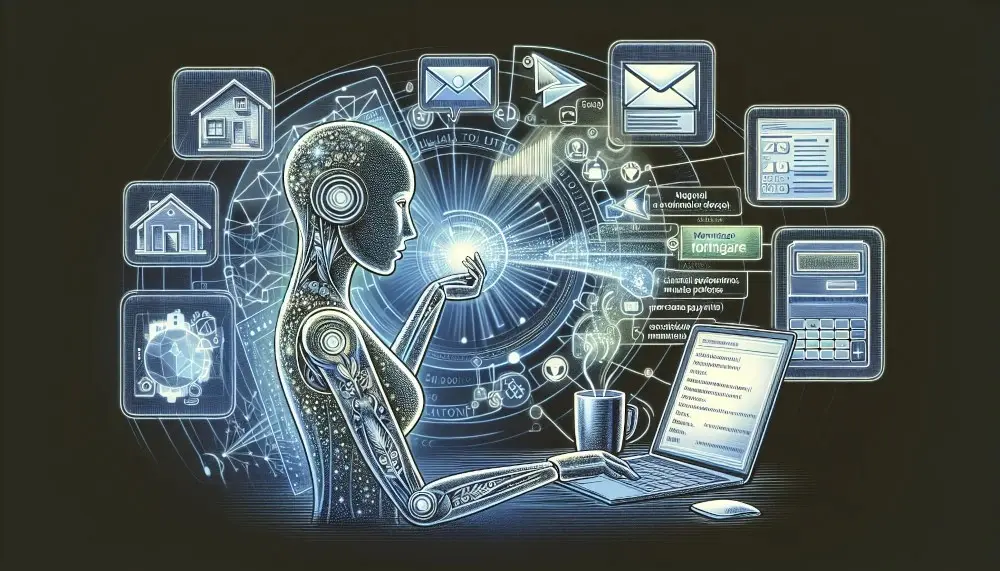
Connect Distributed Models via LLM agent mesh for Unified Intelligence

In the rapidly evolving landscape of artificial intelligence, the integration and unification of distributed models have emerged as a pivotal challenge. The concept of connecting distributed models through a Large Language Model (LLM) agent mesh for unified intelligence represents a significant stride towards achieving seamless interconnectivity and enhanced cognitive capabilities in AI systems.
At its core, this approach leverages the strengths of LLMs—specifically their ability to understand, interpret, and generate human-like text—to serve as intermediaries or agents that facilitate communication between disparate AI models. This mesh network acts as an intelligent interface that enables various AI components to collaborate more effectively by translating complex data into understandable insights and actions.
The primary advantage of employing an LLM agent mesh lies in its capacity to bridge the gap between specialized models. In many applications today, different AI models are designed to perform specific tasks with high precision. However, these specialized systems often operate in isolation, limiting their potential when confronted with multifaceted problems requiring diverse expertise. By integrating them via an LLM agent mesh, it becomes possible to harness collective intelligence across domains without necessitating complete redesigns or retraining for each new task.
One key aspect of this framework is its scalability. As organizations increasingly adopt AI solutions tailored to niche requirements, the demand for scalable architectures that can grow alongside technological advancements becomes paramount. An LLM-based agent mesh provides flexibility by allowing new models or data sources to be incorporated seamlessly into existing networks without disrupting ongoing operations.
Furthermore, such interconnectedness fosters innovation through collaborative learning among distributed entities within the networked system itself. Each model contributes unique perspectives based on distinct training datasets while benefiting from shared experiences facilitated by language-driven interactions orchestrated through natural language processing capabilities inherent within large-scale neural networks like GPT-3 or similar architectures developed subsequently since 2021 onward.
Security considerations also play a crucial role when designing these integrated frameworks; ensuring robust encryption protocols safeguard sensitive information exchanged over interconnected channels remains imperative throughout deployment phases spanning diverse industries ranging from healthcare diagnostics involving confidential patient records up till financial sector analyses dealing extensively around proprietary trading algorithms etcetera where privacy concerns might arise due diligence must always prevail prioritizing ethical standards above all else whenever deploying any form whatsoever related either directly indirectly towards implementing said methodologies discussed hereinabove mentioned contextually speaking regarding connecting distributed modules leveraging latest breakthroughs achieved thus far concerning advancing state-of-the-art research pertaining specifically onto topic at hand namely “Connect Distributed Models via LLM Agent Mesh Unified Intelligence”.
In conclusion: embracing innovations surrounding connectivity amongst autonomous yet synchronized machine intelligences paves way unlocking unprecedented levels efficiency accuracy ultimately transforming how future generations perceive interact computational ecosystems globally influencing myriad aspects daily lives positively impacting humanity collectively moving forward together harmoniously synergistically realizing true potential artificial general intelligence ushering new era technological enlightenment unparalleled history mankind heretofore experienced hitherto unknown possibilities await us horizon beckons invitingly promising brighter tomorrow ahead!
